
Have You Seen the First Declaration?
A DC chance to view what newly-minted Americans saw in July 1776

For most Americans, the Declaration of Independence is the one on permanent display in the rotunda of National Archives. That faded scroll has drawn tens of millions of Americans to view it since its first enshrinement, in the Library of Congress in 1924, and subsequently in the National Archives after its move there in 1952. It was a fascination with the physical survival of the parchment that inspired me to write National Treasure: How the Declaration of Independence Made America (available for pre-order now!).
Yet as I discuss in detail in the book, that scroll was not signed on July 4. Not until August 2 did members of the Continental Congress begin putting their signatures on the document, a process that took months to complete. So how did the colonists learn that they were now citizens of a new nation?
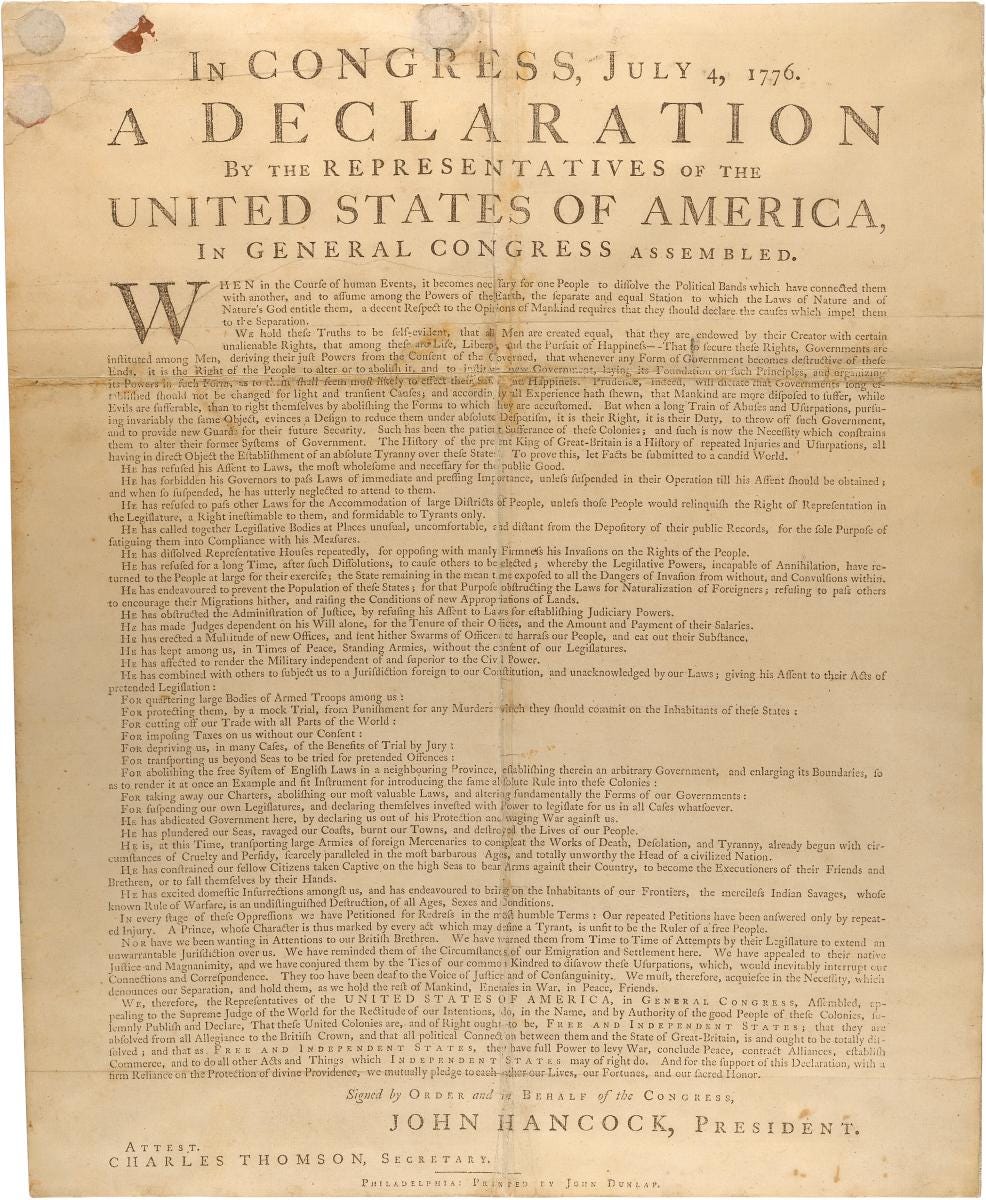
(The John Dunlap Broadside, printed on the night of July 4, in Philadelphia. This copy was pasted into the Continental Congress’ own Rough Journal by Charles Thomson, Secretary of Congress; image from the National Archives.)
The answer, as many but not all Americans today know, was the Dunlap Broadside. Once Congress adopted the Declaration on the morning of the Fourth, someone, maybe Thomas Jefferson, walked the official text a few blocks towards the Delaware River, to the printing shop of John Dunlap, a young Irish immigrant. There, Dunlap hurriedly printed up several hundred single-sheet “broadsides” on cotton-fiber paper, some bearing the watermark of King George III. These were sent back to Congress, where John Hancock, President of the Congress, and Charles Thomson, its Secretary, dispatched them around the colonies by mounted messenger.
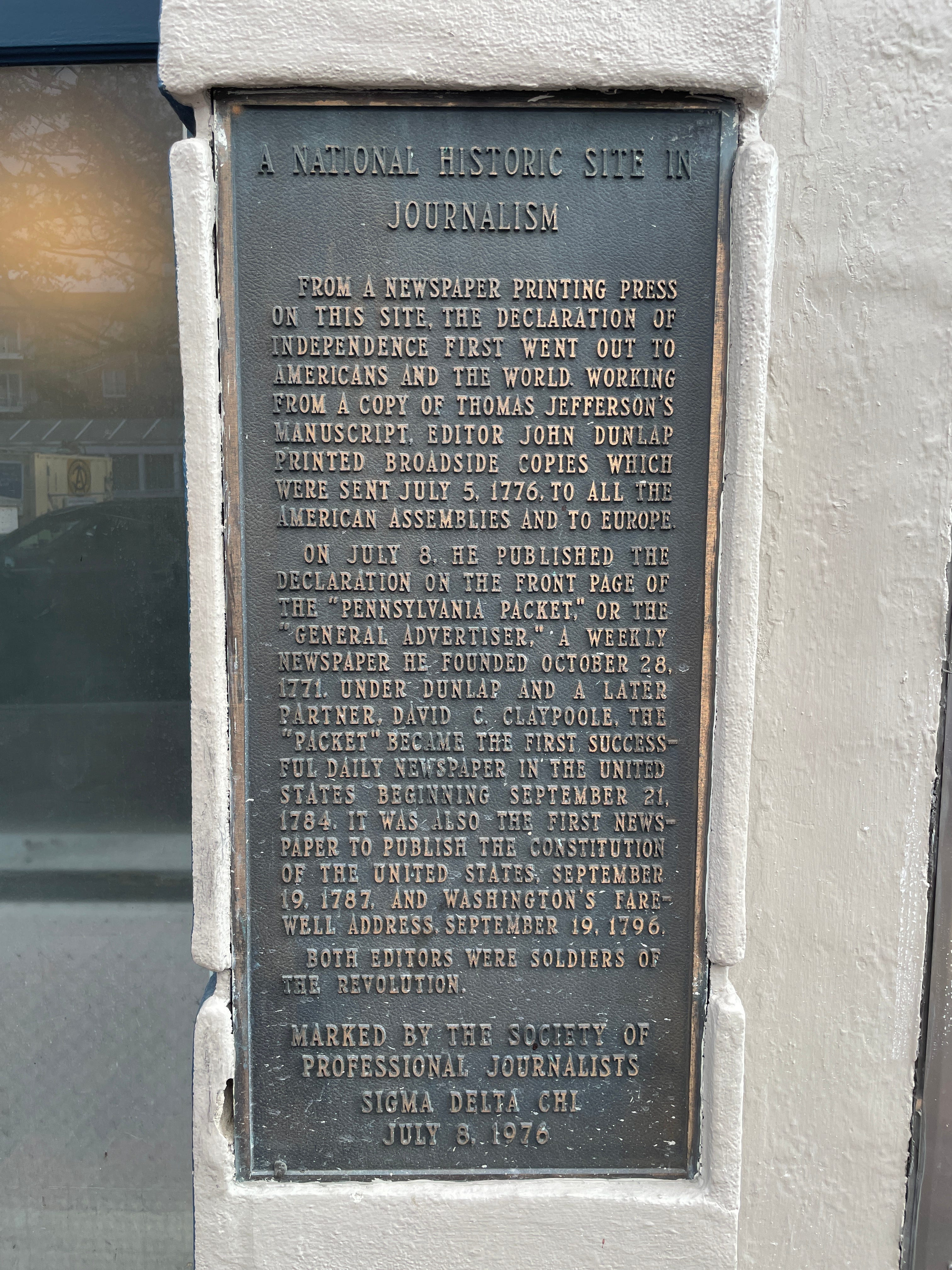
Amazingly, today there is no official marker at the site of Dunlap’s printing shop, on the corner of Second and Market Streets, in Philadelphia. I recently wrote a piece for the Philadelphia Inquirer on the urgent need to put up a sign at the spot of the most important printing job in American history (it’s paywalled, unfortunately, but if you have an Inquirer subscription, enjoy). There is an old, tarnished plaque on a building on the site, put up for the Bicentennial by the Society of Professional Journalists.
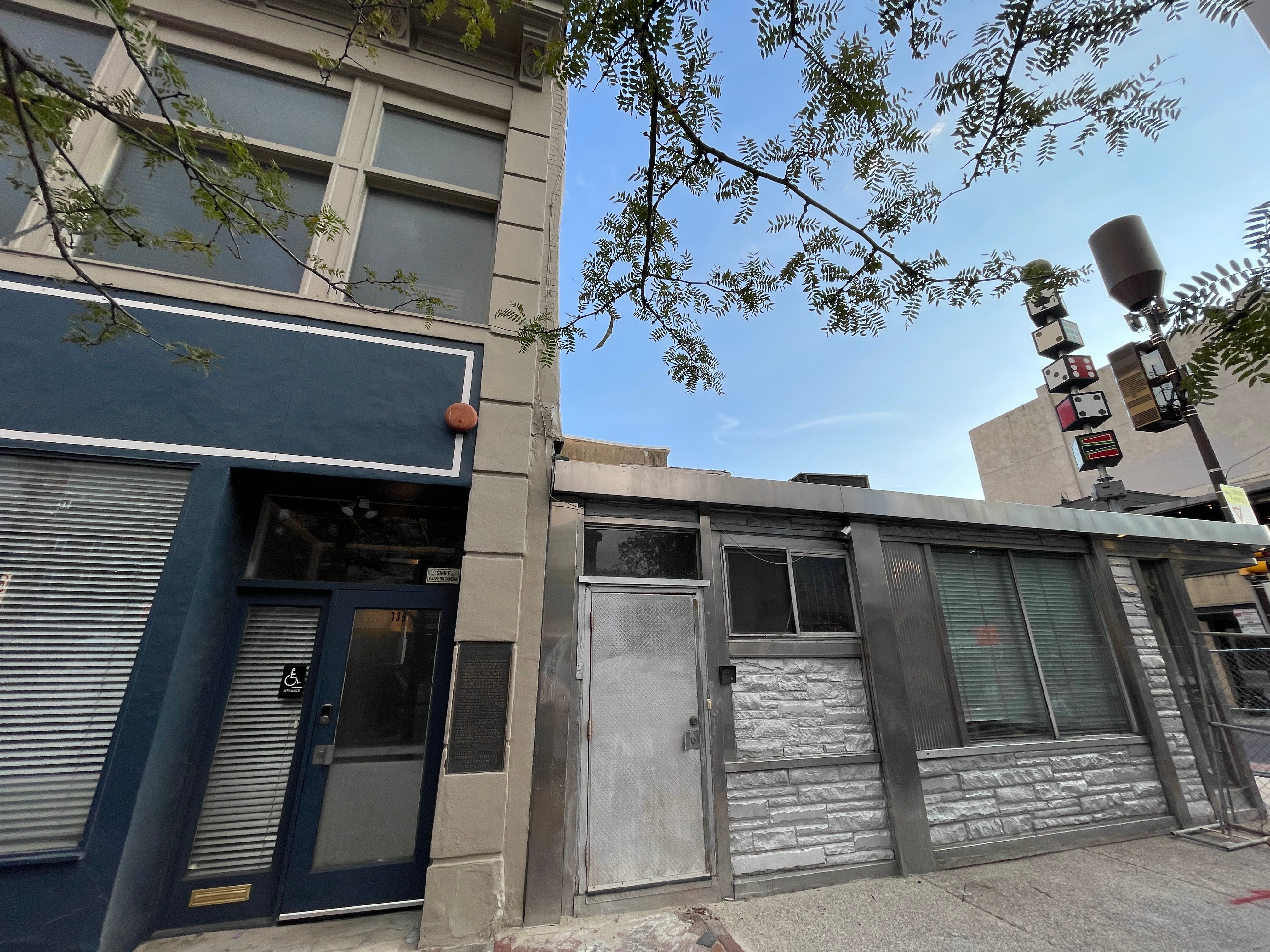
(Site of John Dunlap’s printing shop in Philadelphia, now an abandoned cafe and semi-occupied building.)
Dunlap’s broadsides reached all thirteen colonies, sometimes taking weeks to arrive, and were used by local presses to print their own broadsides to further spread the news. Yet of the maybe 200 broadsides Dunlap printed on July 4-5, today only 26 are known to exist.
Because of their age and fragility, Dunlaps are not often on public display (one that is on permanent exhibit is at the Albert H. Small Declaration of Independence Collection at the University of Virginia Special Collections Library, in Charlottesville).
If you are in Washington, D.C., however, you now have a chance to see an original Dunlap at the American Revolution Institute of the Society of the Cincinnati (where I’m a fellow). This particular Dunlap is the property of the Society of the Cincinnati of the State of New Hampshire, and has a particularly interesting history. It arrived in Exeter, New Hampshire by July 16, where it was read to the public by 22-year-old John Taylor Gilman. The Gilman family kept the broadside in their house, which was eventually purchased by the New Hampshire Cincinnati, but by then the existence of the broadside was either forgotten or known only to a few. During a major restoration of the house in 1985, the broadside was found in the attic, making national news. The Ladd-Gilman house is now the American Independence Museum (which I look forward to visiting one day).
It is this copy, read in public in July 1776, that is on display at the Society of the Cincinnati, as part of their “Voices of the Revolution” exhibit. The New Hampshire Dunlap will be exhibited through early May at the Society’s headquarters located just north of Dupont Circle. While other Dunlaps are being pulled out of storage around the country for the 250th, this is a rare opportunity to see one in the National Capital, and to get a sense of what newly-minted Americans saw and heard in the thrilling and uncertain days after Independence.