
The Boston "National Treasure" Party
A Declaration tour in the Cradle of the Revolution

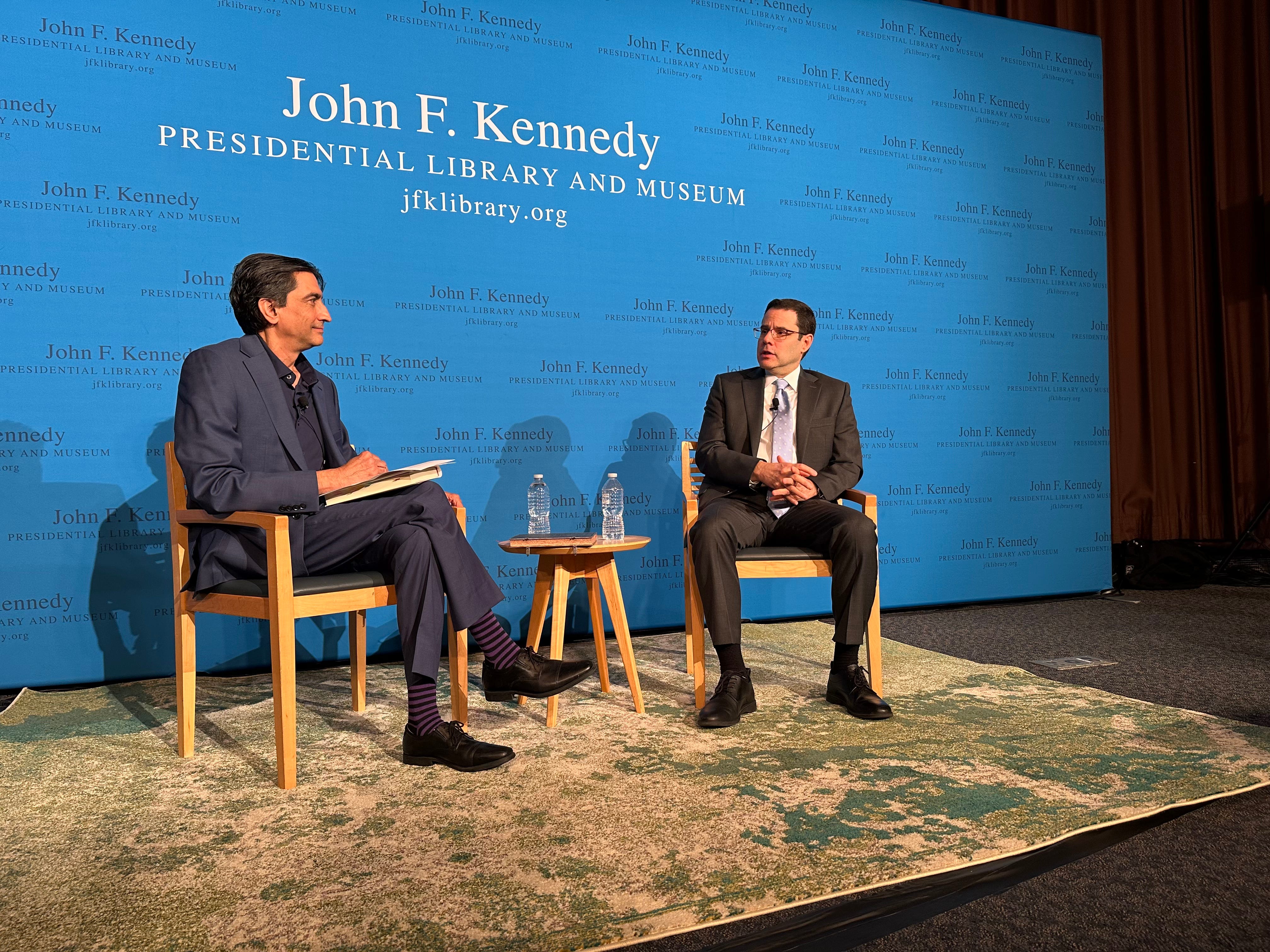
Though not nearly as dramatic as the Boston Tea Party, National Treasure: How the Declaration of Independence Made America launched this week in the Cradle of the Revolution, with a great event at the John F. Kennedy Library (video here). Alan Price, Liz Murphy, and their team were incredibly welcoming, and WGBH’s Arun Rath was a fantastic moderator (as soon as he opened by asking about “metaphysics,” I knew I was in trouble). We had a very nice crowd and good questions, and of course the location is stunning.
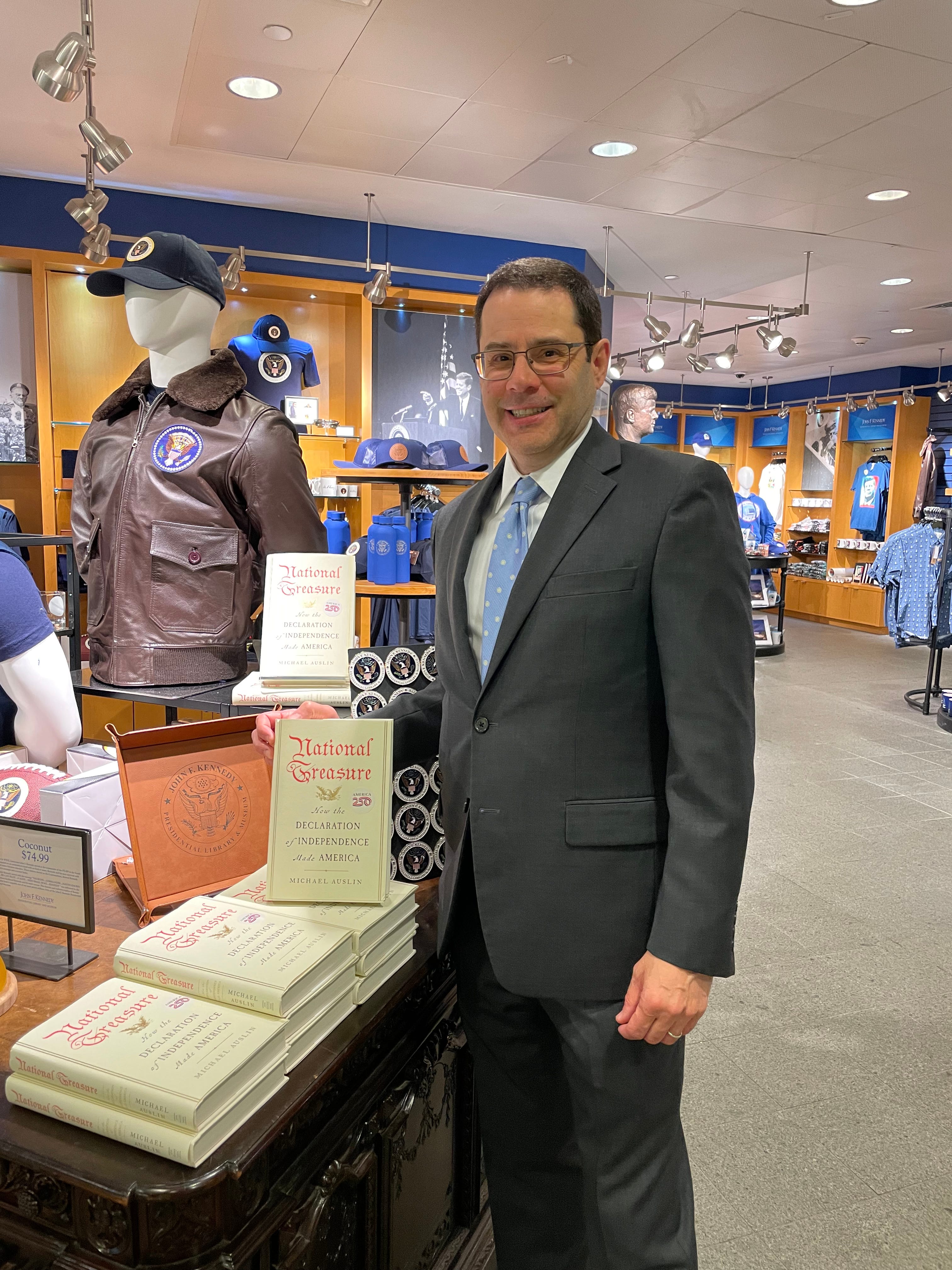
It was also a thrill to see National Treasure on sale for the first time, especially on a reproduction of the Resolute Desk and next to a copy of JFK’s iconic leather jacket.
I spent a few days in Boston, doing some other media, so I took the time to do a brief Declaration tour in what many consider the birthplace of Independence. Right on the Boston Common is a monument to the Declaration, with relief panels of both John Trumbull’s famous scene and the engrossed parchment copy. This beautiful tablet is not the one commissioned during the Civil War (p. 151), but was installed in 1925, and which I inexplicably failed to mention in my book:
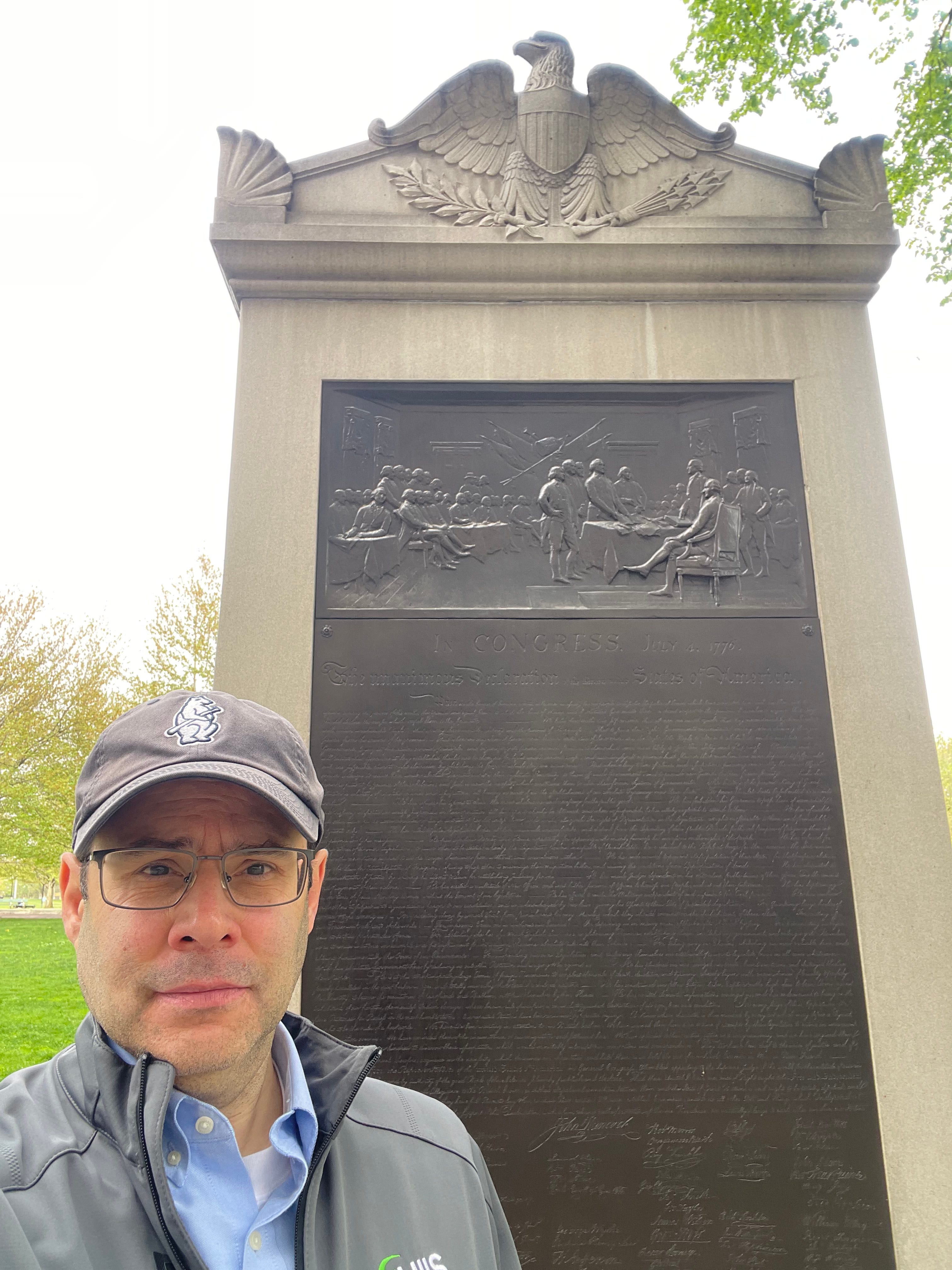
(On the Boston Common. So much easier to wear a Cubs’ ball cap in Boston when Chicago is in first place, and the Red Sox are in the cellar; sorry, Boston friends.)
I stayed just two blocks from the Old State House, from which the Declaration was read in Boston on July 18, 1776, in front of a crowd that included Abigail Adams, who wrote her husband, John, a description of the occasion (p. 44). The rowdy crowd threw down all the royal images on the building and destroyed them, but the lion and unicorn of the British monarch were much later reinstalled for historical purposes, apparently with no opposition by latter-day Sons of Liberty. Right in front is a medallion in the pavement marking the spot of the 1770 Boston Massacre. It’s sort of crazy that this historic 1713 building now is not only a museum but also a “T” station on its ground floor!
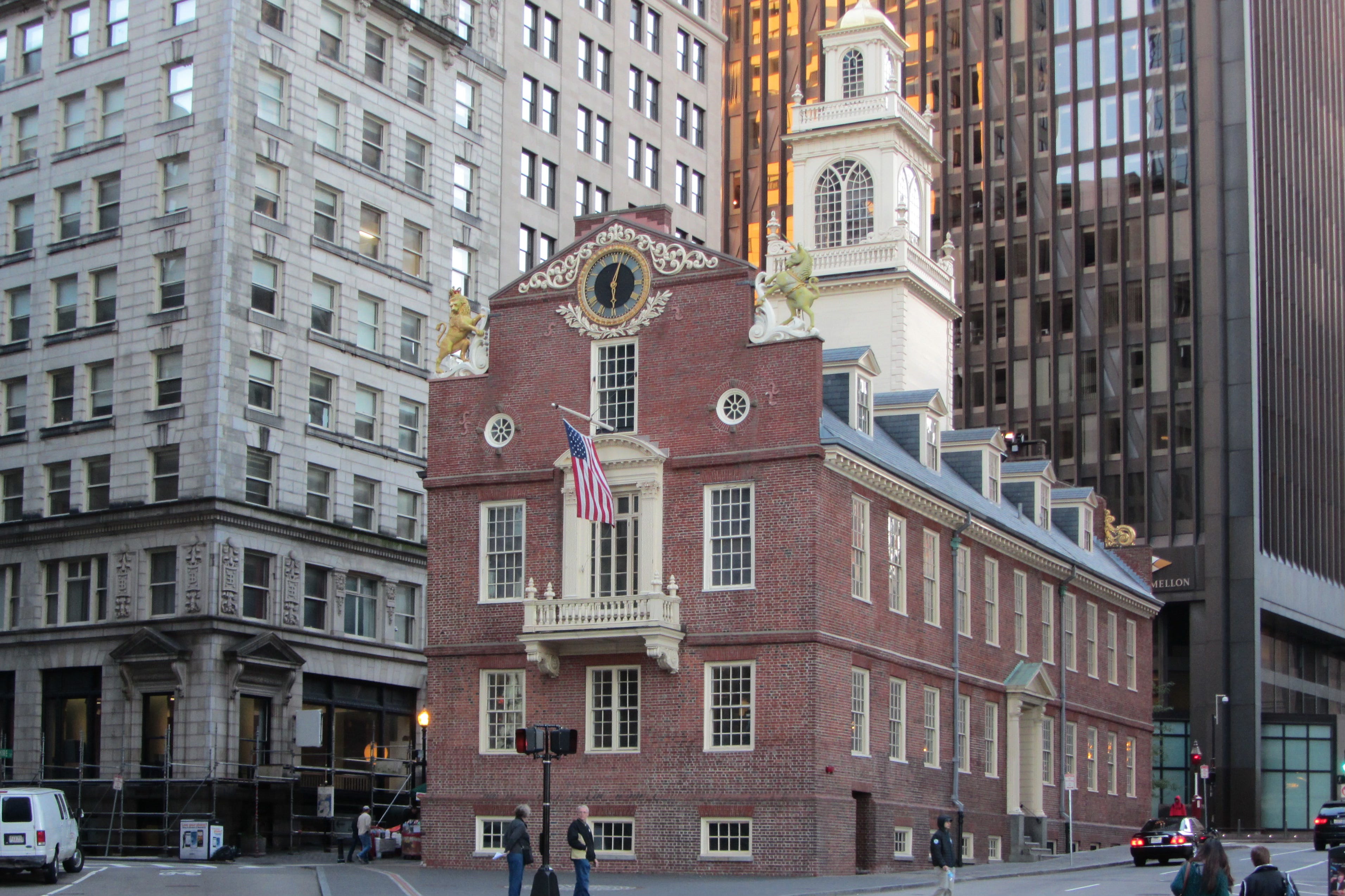
(Image by Robert Linsdell from St. Andrews, Canada - Old State House, Washington St, Boston (493457), CC BY 2.0, https://commons.wikimedia.org/w/index.php?curid=46943487)
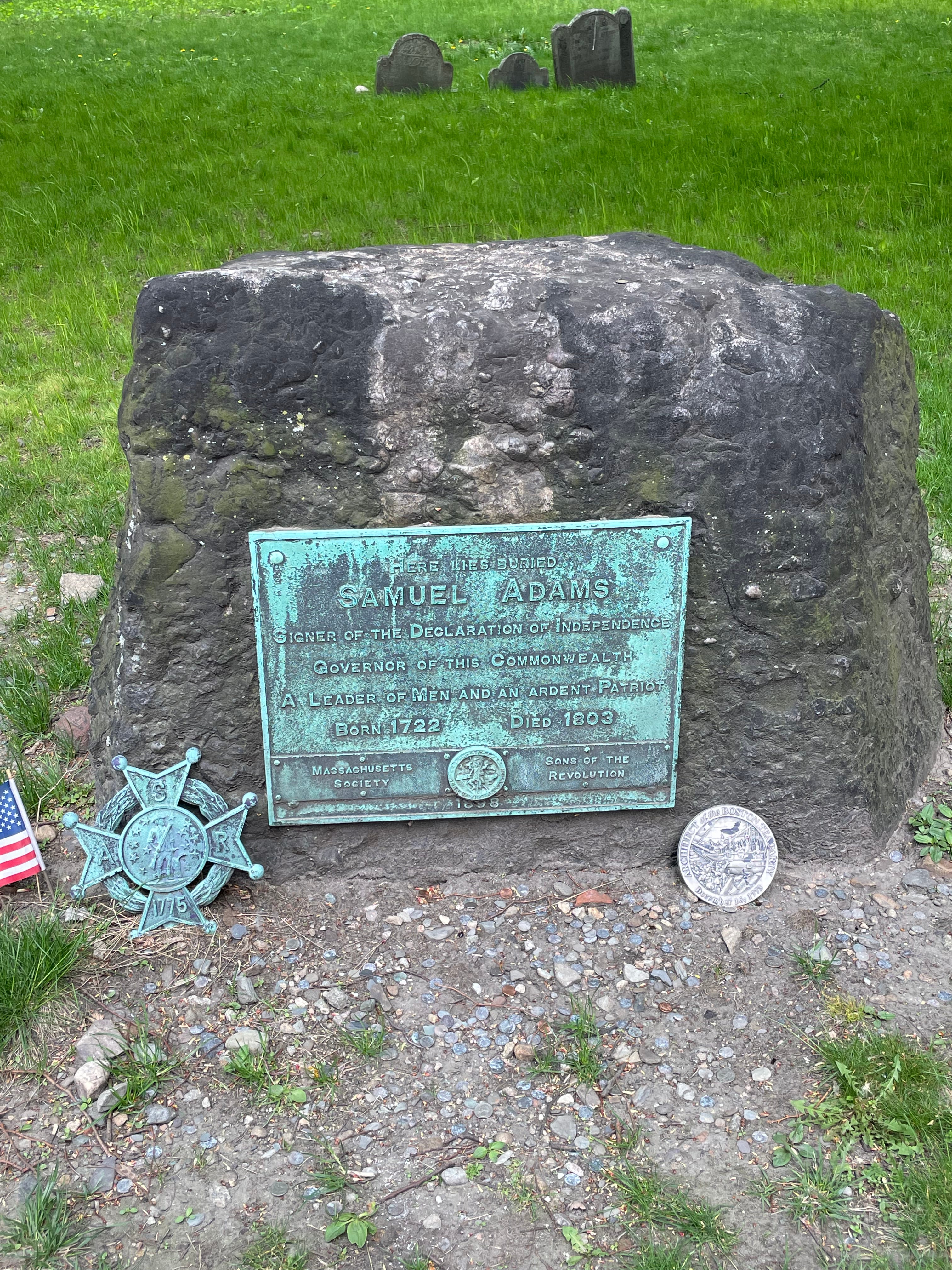
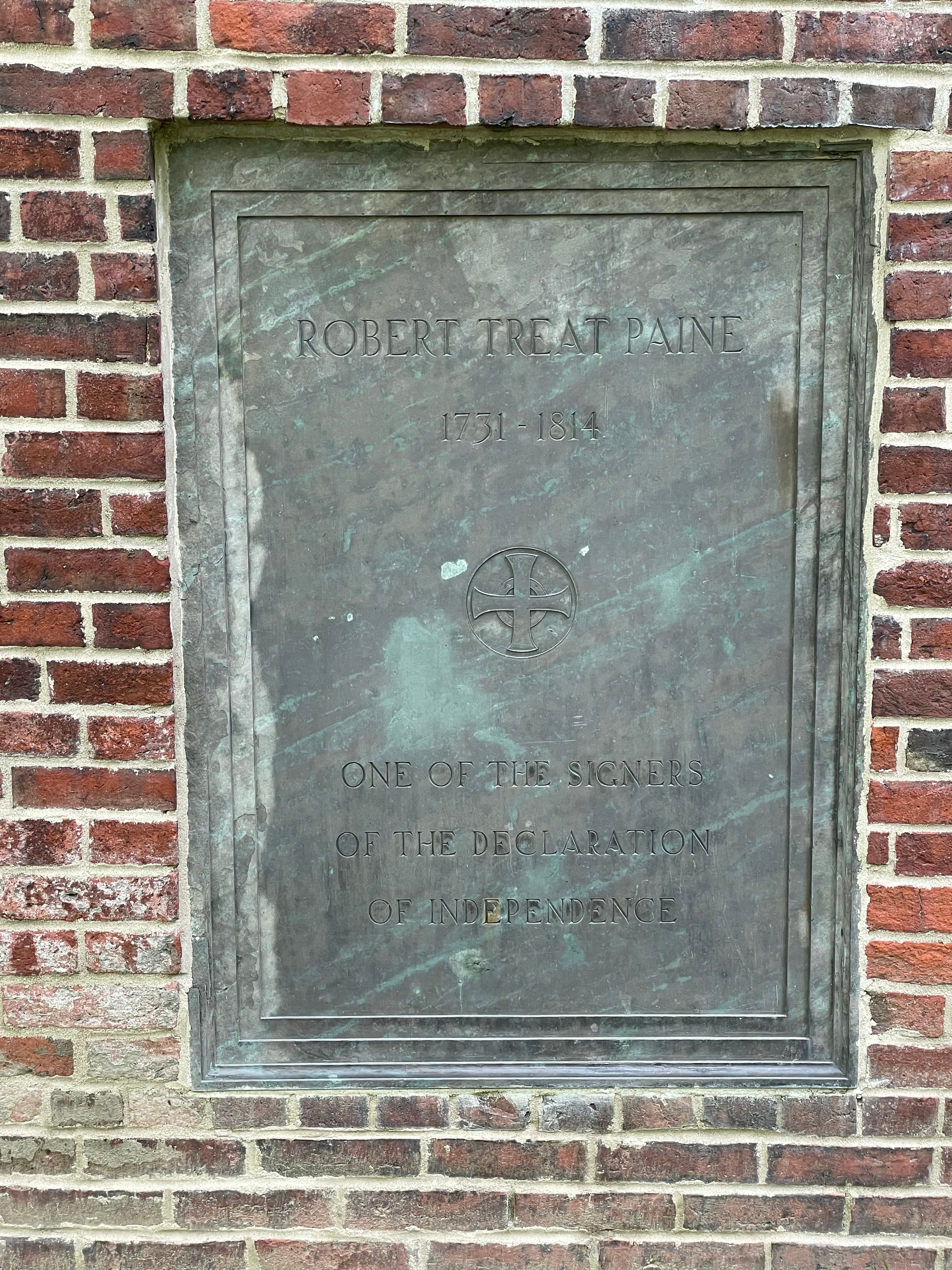
A few blocks away, the famous Granary Burying Ground has the graves of three signers, including the “Great Tree,” John Hancock, president of the Continental Congress and he of the famous signature (p. 17),
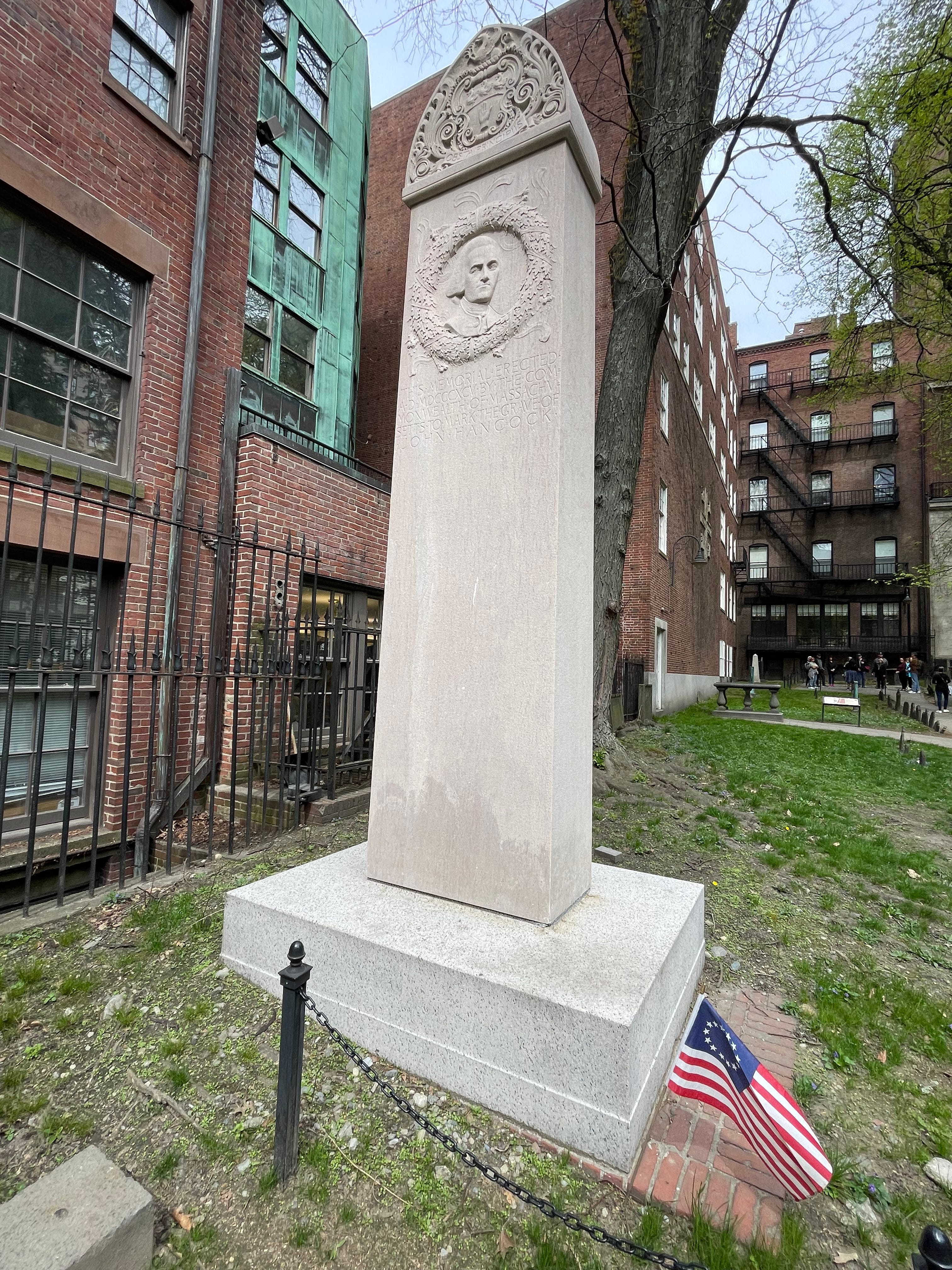
(This and following images by author.)
firebrand Samuel Adams,
and Robert Treat Paine.
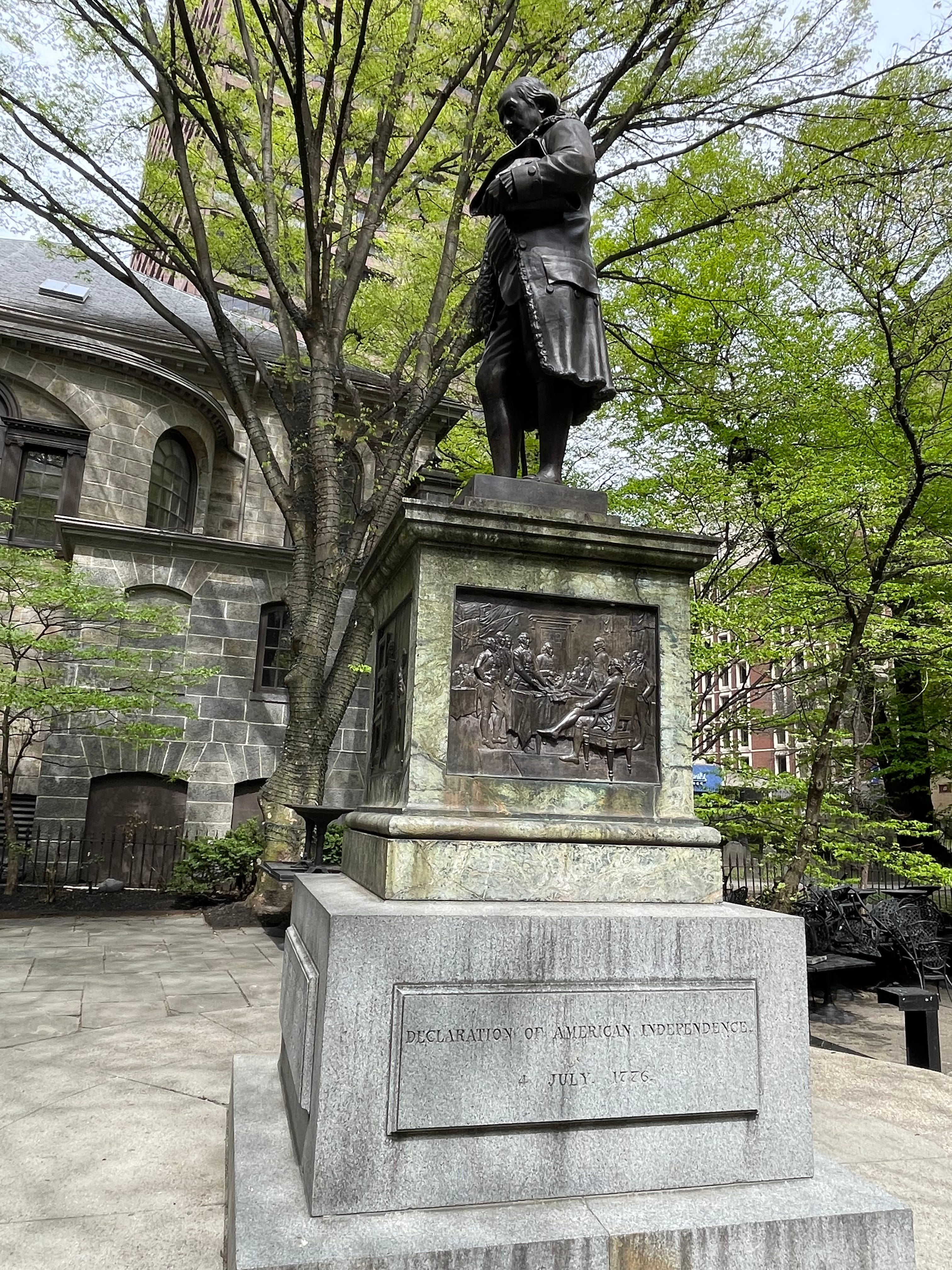
Nearby, in front of the Old City Hall, is an 1856 statue of Benjamin Franklin, born in Boston in 1706. On its pedestal is another bronze relief panel of Trumbull’s iconic scene:
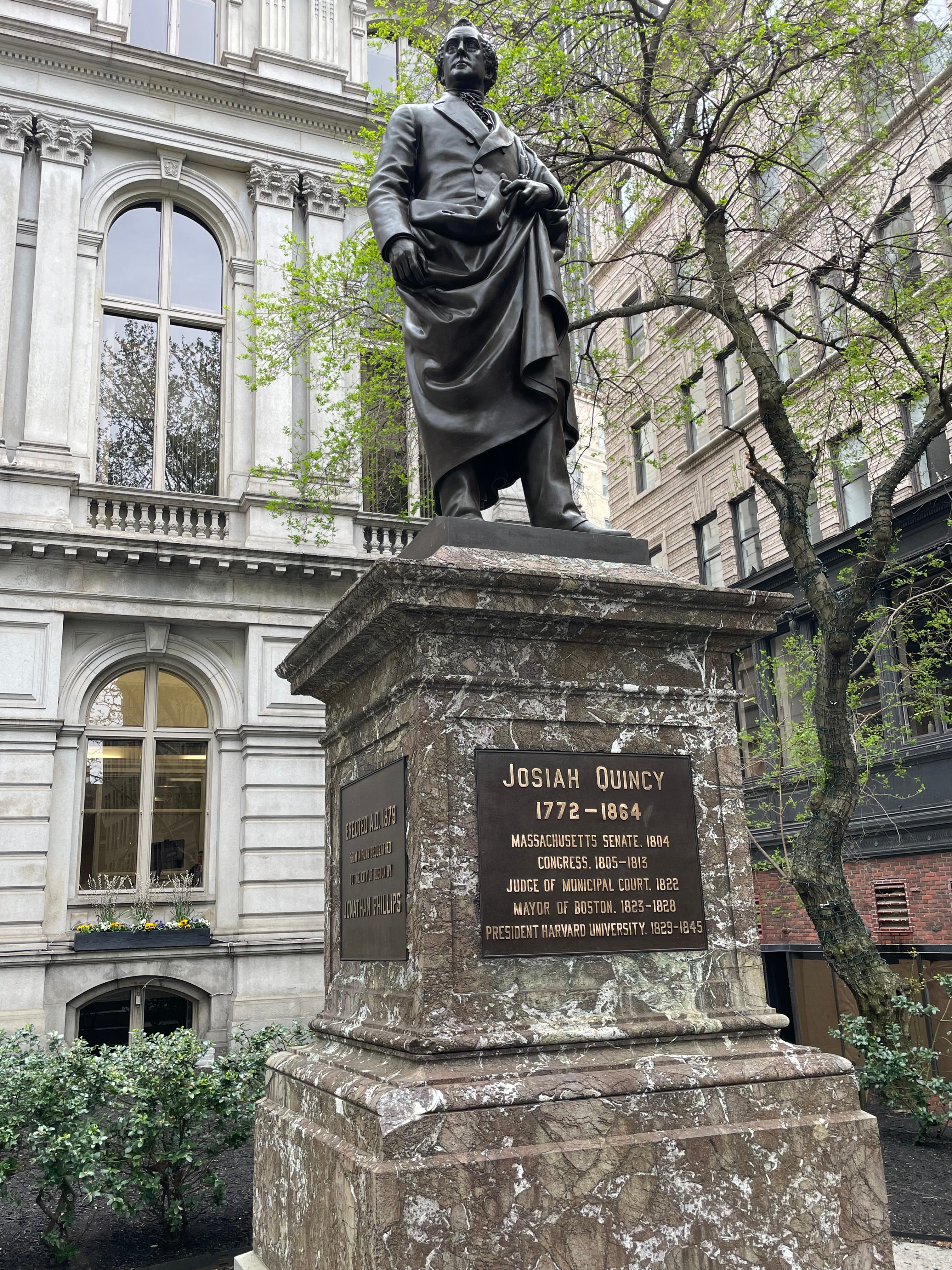
Next to that is a statue of Josiah Quincy, who as mayor gave a memorable, and New England-centric, address in Boston on July 4, 1826, on the 50th anniversary of the adoption of the Declaration (p. 102):
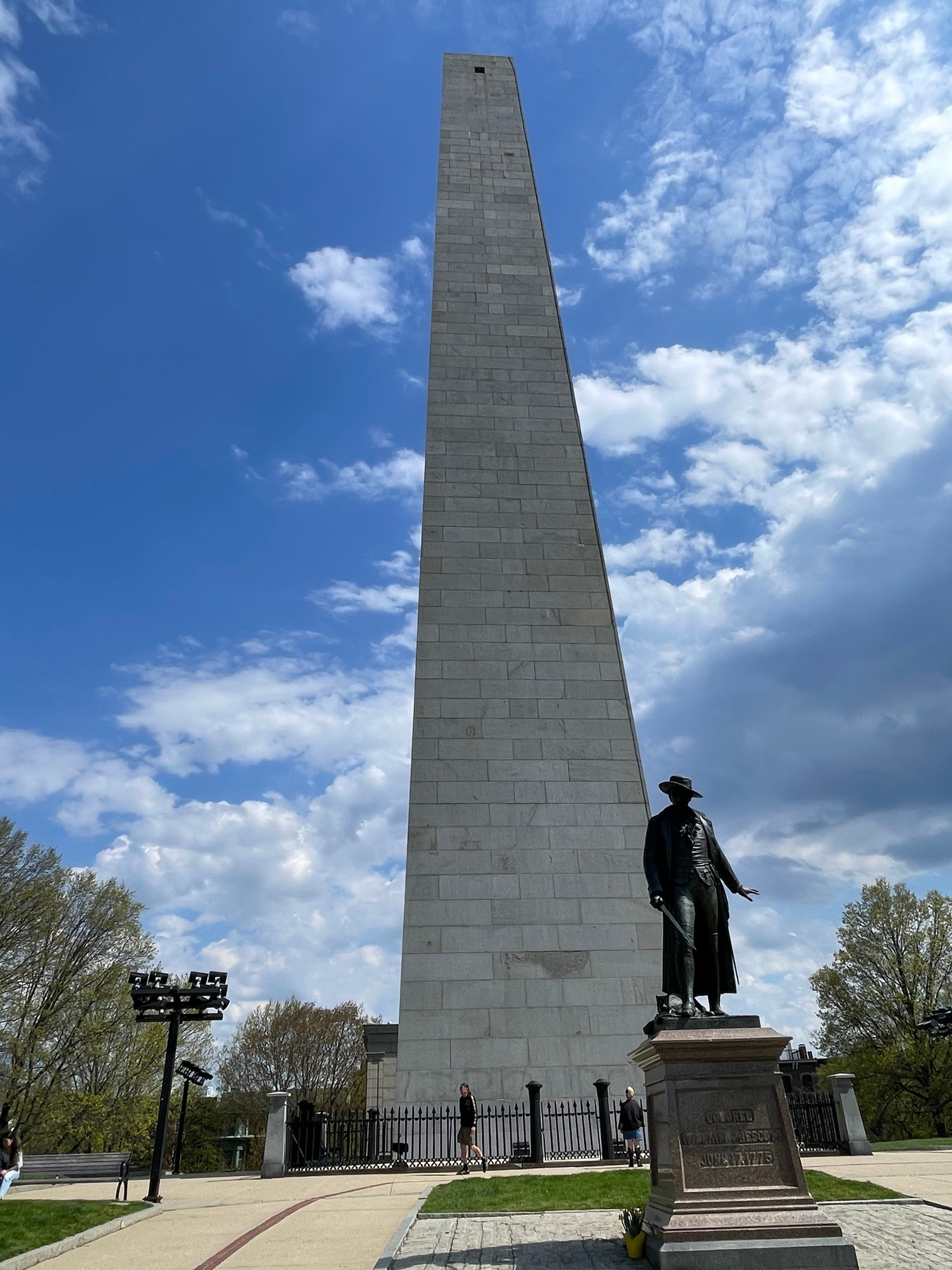
I also toured the magnificent Bunker Hill Monument, taking the T ferry from Long Wharf to Charlestown. Approaching from the water, despite the built-up city, still gives one a sense of what it felt like on that fateful day of June 17, 1775, a major step towards Independence.
Walking through the Declaration’s history in Boston was a perfect way to personally celebrate the launch National Treasure. All of the Freedom Trail is highly recommended, if you haven’t done it yet, especially during this Semiquincentennial year.
Reminds me of my visits to Historic Boston and the feelings of living in History that I had while touring.